Now Reading: How GCCs in Bangalore Are Reshaping Pharma & Biotech
- 01
How GCCs in Bangalore Are Reshaping Pharma & Biotech
How GCCs in Bangalore Are Reshaping Pharma & Biotech
 ScaleGCC Editorial TeamIndustry1 year ago876 Views
What if the future of drug discovery, clinical research, and biotech innovation was not shaped in Western labs but in the heart of Bangalore? Global Capability Centers (GCCs) in India’s tech capital are making this a reality, transforming the pharma and biotech landscape worldwide.
Do Read: What is a Global Capability Center? Complete 2025 Guide
What you will learn: What are Pharma & Biotech GCCs? | Why Bangalore Is Emerging as the GCC Hub | Key Areas Where GCCs Are Driving Pharma R&D | Case Examples: Pharma Leaders in Bangalore | GCCs vs Traditional Outsourcing in Pharma R&D | Future Trends: GCC 3.0 in Pharma & Biotech | How to Choose Bangalore for Your GCC
GCCs in Bangalore Are Reshaping Pharma & Biotech
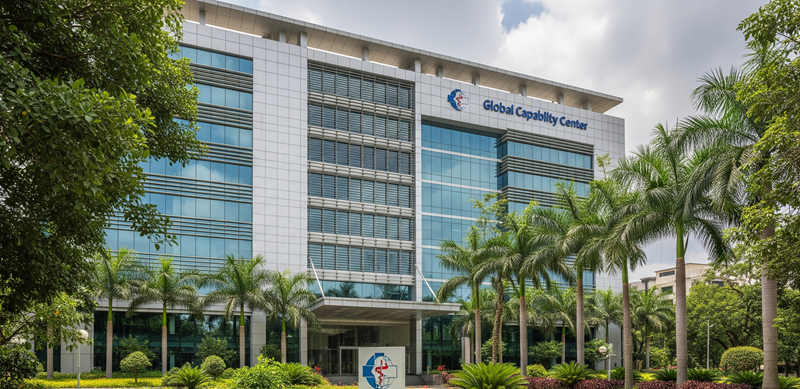
Bangalore, often celebrated as India’s Silicon Valley, is now a powerhouse for pharmaceutical and biotechnology research. The rise of Global Capability Centers (GCCs) in the city has shifted their role from cost-efficient back-office setups to cutting-edge innovation hubs. Leading pharma companies are leveraging Bangalore-based GCCs for drug discovery, clinical trials, AI-driven research, and global regulatory operations.
GCC News: How 6 Indian GCC Cities Became the Backbone of Global Capability Centres
In this blog, we explore how pharma and biotech GCCs in Bangalore are reshaping global R&D, why the city has become a preferred hub, and what trends will define the future of pharma-focused GCCs.
What Are Pharma & Biotech GCCs?
A Pharma or Biotech Global Capability Center (GCC) is a dedicated offshore center established by multinational life sciences companies to handle functions ranging from R&D to digital transformation. Unlike traditional outsourcing, GCCs operate as extensions of the parent enterprise, providing strategic control, access to specialized talent, and alignment with corporate objectives.
In pharma and biotech, GCCs go beyond cost efficiency. They serve as innovation engines, developing new therapies, supporting regulatory submissions, and building AI-driven drug pipelines.
Breaking News: What You Must Know About the Karnataka Global Capability Center Policy 2024–2029
Why Bangalore Is Emerging as the GCC Hub
Bangalore has become the epicenter for pharma and biotech GCCs due to its unique blend of talent, infrastructure, and innovation ecosystem. The city is home to a strong pool of biotech researchers, clinical trial experts, and digital engineers. Coupled with government support, favorable policies, and proximity to India’s growing healthcare ecosystem, Bangalore is the perfect launchpad for GCCs.
Access to over 10,000+ life sciences professionals.
Proximity to India’s biotech clusters in Karnataka.
Strong IT infrastructure enabling AI-driven clinical trials.
Supportive government initiatives such as Biotech Policy 3.0.
Must Read: Global Capability Center vs Outsourcing: Key Differences
Key Areas Where GCCs Are Driving Pharma R&D
Pharma and biotech GCCs in Bangalore are not just support functions; they are mission-critical to global R&D operations. They deliver end-to-end value across the innovation cycle.
Drug Discovery – GCCs are conducting computational modeling, target identification, and compound screening using AI-driven platforms.
Clinical Trials – They manage global trial data, digital patient monitoring, and compliance reporting in real-time.
Regulatory Submissions – Bangalore centers support dossier preparation and global regulatory filing for the US FDA, EMA, and WHO.
Pharmacovigilance & Safety – Specialized teams in Bangalore manage adverse event reporting and patient safety analytics.
Case Examples: Pharma Leaders in Bangalore
Several global pharma companies have already made Bangalore their innovation hub.
Novo Nordisk established a large GCC focused on diabetes R&D and digital clinical platforms.
AstraZeneca uses its Bangalore GCC to drive AI-powered drug discovery.
Novartis operates one of its largest GCCs in India, managing global trials and regulatory operations.
These examples show how GCCs have evolved into critical global nerve centers, not just delivery back-ends.
GCCs vs Traditional Outsourcing in Pharma R&D
While outsourcing has historically served pharma R&D, GCCs provide deeper integration, governance, and innovation.
| Aspect | Pharma GCC in Bangalore | Outsourcing Vendor |
|---|---|---|
| Control | Direct governance & alignment | Vendor-driven processes |
| Talent | Dedicated biotech & R&D specialists | Shared resources across multiple clients |
| Innovation | AI labs, regulatory excellence hubs | Limited to predefined tasks |
| Scalability | Long-term global scaling | Short-term project-based scaling |
| Best For | Strategic innovation & global R&D | Tactical, non-core pharma activities |
Pharma GCC Setup Checklist
Download NowGCC vs Outsourcing Comparison App
Try NowFuture Trends: GCC 3.0 in Pharma & Biotech
The next wave of pharma GCCs in Bangalore aligns with GCC 3.0, centers that combine science, technology, and leadership development. This shift will redefine how life sciences companies operate globally.
AI & Genomics Integration: Predictive drug modeling and personalized medicine research.
Digital Clinical Trials: Remote patient monitoring and blockchain-backed data integrity.
Sustainability & ESG: Energy-efficient labs and ethical research practices.
Leadership Pipelines: Offshore centers nurturing next-gen pharma leaders.
Must read: Strategic Models for Global Capability Centers: From BOT to GCC 3.0
How to Choose Bangalore for Your GCC
Selecting Bangalore as your pharma GCC hub requires more than cost calculations. Companies must evaluate factors such as ecosystem depth, regulatory support, and long-term scalability.
If your goal is AI-driven drug discovery, Bangalore offers the right talent mix.
For global clinical trials, the city’s regulatory expertise is unmatched.
If scalability and compliance are priorities, Bangalore’s biotech cluster is a safe bet.
For innovation-first R&D, the city provides partnerships with leading academic and research institutes.
Bangalore is no longer just India’s IT capital, it is fast becoming the world’s pharma and biotech innovation hub through its Global Capability Centers. With world-class talent, government support, and digital infrastructure, GCCs in Bangalore are redefining how pharma companies approach R&D.
What makes Bangalore a top destination for pharma GCCs?
Bangalore offers a combination of biotech talent, IT infrastructure, and government support. The presence of academic research institutes and a thriving startup ecosystem make it a natural hub for pharma innovation.
How do pharma GCCs differ from outsourcing vendors?
Pharma GCCs provide strategic integration into global R&D operations, ensuring governance, IP control, and alignment with corporate culture. Outsourcing vendors are task-based, with limited scope for innovation or leadership development.
Which pharma companies already have GCCs in Bangalore?
Global leaders such as Novo Nordisk, AstraZeneca, and Novartis have large GCCs in Bangalore, focusing on everything from drug discovery to clinical trials and regulatory submissions.
What trends will shape pharma GCCs in 2025 and beyond?
Trends include AI-powered drug discovery, remote-first clinical trials, sustainability practices in labs, and GCC 3.0 models that embed leadership development and global governance.
What risks exist when setting up a pharma GCC in Bangalore?
Risks include competition for talent, evolving compliance requirements, and challenges in cultural integration. These issues can be mitigated through strong governance, local partnerships, and continuous professional development.